
-
Laser vs In-Office Teeth Whitening: What Has Actually Changed?
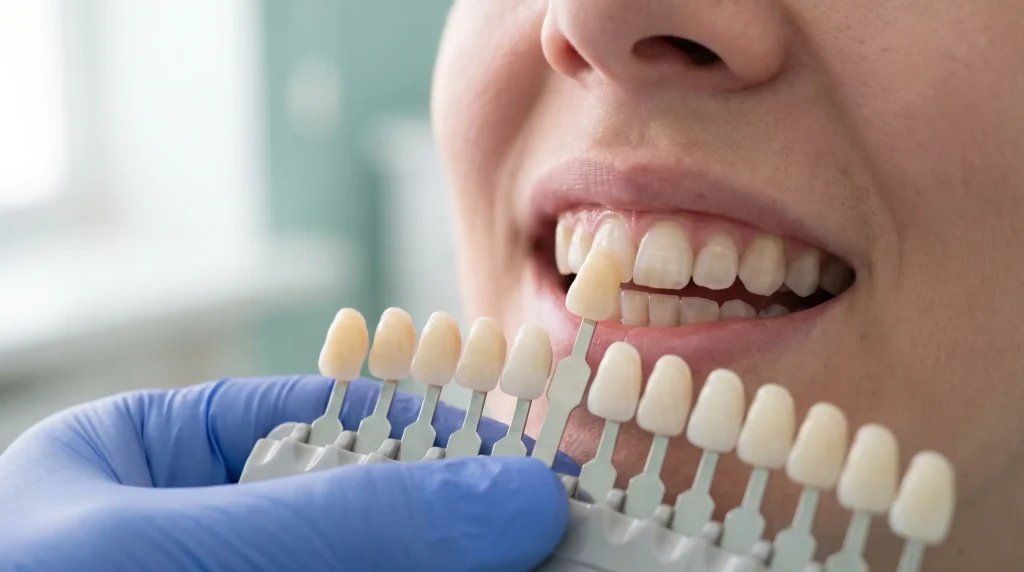
Teeth whitening has become one of the most requested cosmetic dental procedures, but the technology used for professional whitening has also changed considerably. Patients are now frequently presented with terms such as laser whitening, LED whitening, light activated whitening and in-office bleaching, and it is not always obvious what the practical difference is.
This raises an interesting question for dental professionals: how much does the technology itself contribute to the final whitening result, and how much depends on the bleaching agent, concentration, application protocol and the patient’s individual teeth?
Is laser whitening really different from in-office whitening?
Laser whitening is generally performed in a dental office using a professional bleaching agent, with a light or laser device used as part of the treatment protocol. Traditional in-office whitening can also use professional peroxide based products without necessarily relying on a laser.
The important point is that the light source is not the only factor responsible for whitening. The bleaching agent and its interaction with the tooth structure remain central to the procedure.
This is why patients should be cautious when comparing treatments based only on terms such as “laser” or “advanced technology.” Two clinics can use different systems and achieve different results even when both advertise professional whitening.
What should dentists evaluate before whitening?
A proper whitening consultation should ideally happen before the treatment itself.
The dentist needs to determine whether the patient’s discoloration is suitable for bleaching and whether there are underlying dental problems that should be treated first. Existing cavities, leaking restorations, gum problems or significant tooth sensitivity can change the treatment approach.
It is also important to explain that whitening affects natural tooth structure differently from artificial restorations. Existing crowns, veneers, bridges and fillings generally do not whiten in the same way as natural enamel.
This can become particularly relevant for patients who have visible restorations on their front teeth.
Why are some whitening results much stronger than others?
Individual results can vary significantly.
The original shade of the teeth, type of staining, age, enamel characteristics, diet and previous dental treatment can all influence the outcome. External stains caused by coffee, tea or smoking can respond differently from deeper intrinsic discoloration.
The concentration and formulation of the bleaching product also matter, as does the length and number of treatment sessions.
For this reason, a promise of a specific number of shades of improvement should be interpreted carefully. A professional consultation is more useful than assuming that every patient will achieve the same result.
What about sensitivity?
Tooth sensitivity is one of the most common concerns associated with whitening.
Some patients experience temporary sensitivity during or after treatment, while others may have little or no discomfort. The risk can depend on the bleaching formulation, exposure time, existing sensitivity and the condition of the teeth.
A dentist can assess these factors and determine whether whitening is appropriate or whether adjustments to the protocol are needed.
This is another reason why professional whitening should not be viewed simply as a cosmetic procedure that can be selected based on price alone.
Does laser whitening cost more?
The cost varies between clinics and countries, so there is no single price that can be applied universally.
Laser or light assisted whitening may cost more in some practices because of the equipment, treatment protocol and positioning of the service. Traditional professional in-office whitening may use different materials and equipment and therefore have a different price.
Patients comparing prices should ask what is included. Does the quoted amount cover a consultation? Is professional cleaning required first? How many applications are included? Are take-home trays included? Is a follow-up appointment part of the package?
Looking at the final cost without checking these details can make two apparently similar whitening treatments difficult to compare.
Is newer technology automatically better?
This is perhaps the most interesting question from a technology perspective.
New equipment can improve workflow, treatment planning and the patient experience, but newer technology does not automatically mean a better clinical outcome in every situation.
The dentist’s diagnosis, choice of bleaching material, treatment protocol and ability to manage sensitivity are all important.
Technology should therefore support the clinical process rather than become the main reason a patient chooses one treatment over another.
The role of dental technology in Albania
Albania’s private dental sector has increasingly incorporated modern equipment and cosmetic dentistry services, particularly in Tirana. International patients researching treatment abroad are often interested in whitening alongside veneers, crowns and implant treatment.
For someone comparing whitening options in Albania, it can be useful to ask which whitening system is actually being used rather than simply asking whether the clinic offers “laser whitening.”
The patient should also ask whether the treatment is performed by a dentist, which bleaching product is used, whether a consultation is included and what aftercare is provided.
These questions provide much more useful information than the marketing terminology alone.
What should patients compare?
A useful comparison between laser and conventional in-office whitening should include several factors:
Treatment method: What bleaching agent is being used and how is it activated?
Expected result: Is the goal removal of surface staining or a more substantial change in tooth shade?
Sensitivity: What precautions are taken for patients with sensitive teeth?
Restorations: Does the patient have crowns, veneers or fillings that will not change colour?
Number of sessions: Is one appointment sufficient or could additional treatment be recommended?
Maintenance: What habits can affect how long the result lasts?
Total cost: What exactly is included in the advertised price?
The answers can be more important than whether the treatment is labelled laser, LED or simply professional in-office whitening.
For patients who are researching whitening options in Albania, this detailed comparison looks specifically at the differences between laser and in-office whitening, including treatment methods, expected results and cost considerations: https://andent.al/blog/teeth-whitening-albania-laser-vs-in-office-cost/
andent.al
Teeth Whitening in Albania: Laser, In Office and Home Kits Compared
Professional teeth whitening in Tirana explained. Laser whitening, in office bleaching and take home trays compared on results, sensitivity, longevity and 2026 prices.
Sorry, there were no replies found.
Log in to reply.